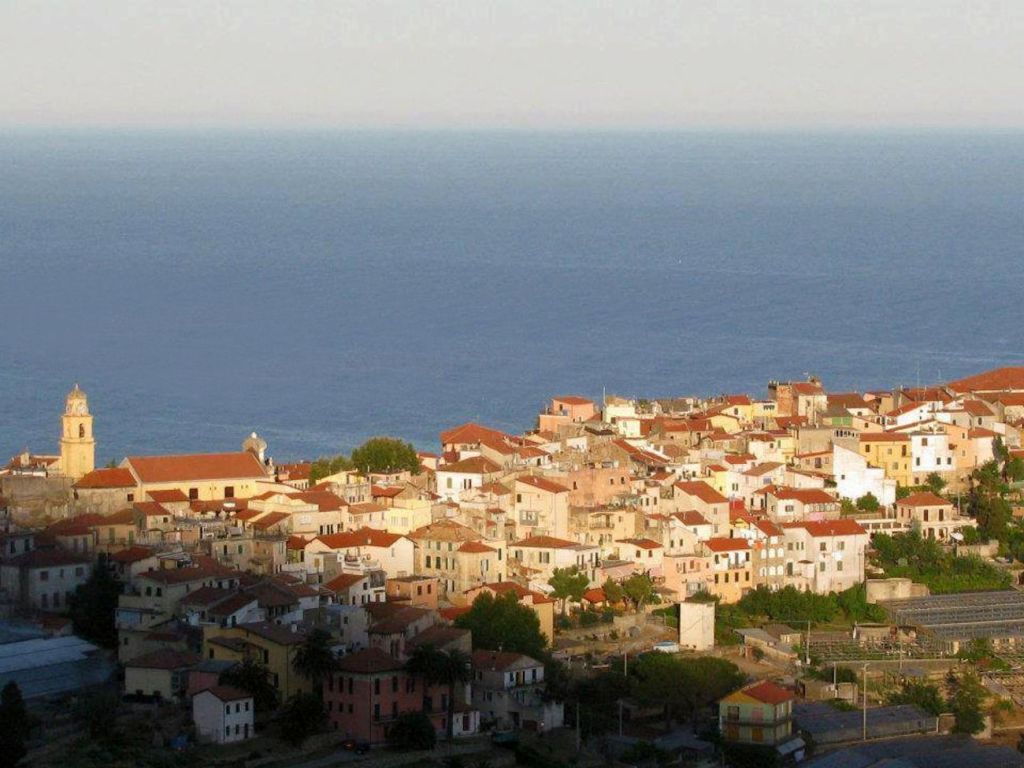
Liguria, Italy’s Blue Flag Leader Once Again

Once again, Liguria confirms its position as one of Italy’s finest coastal destinations. In the 2026 edition of the Blue Flag awards, Italy reached a record 257 awarded municipalities, with 84 more beaches recognised compared to the previous year.

Liguria remains firmly in first place with 35 Blue Flag municipalities, ahead of Puglia and Calabria (27 each), Campania (20), Marche (20) and Tuscany (19). This achievement reflects a long term commitment to environmental quality, sustainable tourism and coastal management, factors that continue to strengthen the region’s appeal among residents, visitors and international property buyers.

Credit: La mia Liguria

The result is particularly significant for the Italian Riviera, where the sea is not simply a summer attraction, but an essential part of local identity, daily life and long term appeal. For those looking for a second home by the sea, the Blue Flag recognition offers a clear sign of environmental quality, services and responsible coastal management.

What Does the Blue Flag Award Mean?

The Blue Flag (Bandiera Blu) is an internationally recognised environmental certification awarded by the Foundation for Environmental Education (FEE). The programme evaluates coastal destinations based on a wide range of criteria, including water quality, environmental management, public services, sustainability initiatives, safety and accessibility.

The award is not based solely on clean water. Municipalities must demonstrate long term commitment to environmental protection, efficient waste management, sustainable mobility and the overall quality of the visitor experience. More than 30 criteria are assessed and regularly updated to reflect evolving environmental standards.

For homeowners and property investors, the Blue Flag often serves as an indicator of a well managed destination that is likely to maintain its appeal and value over time.

The Awarded Beaches of West Liguria

In 2026, West Liguria once again plays a leading role. In the province of Imperia, eight municipalities received the Blue Flag: Bordighera, San Remo, Riva Ligure, Santo Stefano al Mare, San Lorenzo al Mare, Imperia, Diano Marina and Taggia. The return of Taggia is one of the new entries of the year, further strengthening the Riviera dei Fiori among Italy’s most appreciated coastal areas.

San Remo confirms several awarded beaches, including Tre Ponti, Imperatrice, Bussana, Baia Capo Pino and Tiro a Volo, together with the prestigious Portosole marina. Bordighera, Santo Stefano al Mare, San Lorenzo al Mare, Imperia and Diano Marina also continue to represent the high standards of the western Italian Riviera.

Further along the Ponente coastline, the province of Savona also confirms its strength, with destinations such as Andora, Laigueglia, Loano, Finale Ligure, Noli, Spotorno, Celle Ligure and Varazze. Andora is another 2026 new entry, adding further value to an already highly regarded stretch of the Ligurian coast.

Continue reading Liguria, Italy’s Blue Flag Leader Once Again

Milano Sanremo 2026: la Classicissima du cyclisme sur la Riviera italienne

Credit: In punta di sellino

Chaque printemps, la Milano Sanremo marque le début de la saison des grandes classiques du cyclisme. Surnommée La Classicissima, cette course mythique relie le nord de l’Italie à la mer Méditerranée et constitue l’un des événements sportifs les plus emblématiques du calendrier international.

L’édition 2026 de la course cycliste Milan San Remo se déroulera le 21 mars, réunissant les meilleurs coureurs du monde pour près de 300 kilomètres de course, entre les plaines lombardes et les paysages spectaculaires de la Riviera italienne.

Histoire de la Milano Sanremo

La première édition de la Milano Sanremo remonte à 1907. Dès le début, cette course s’impose comme un défi exceptionnel en raison de sa longueur, qui en fait aujourd’hui encore la plus longue épreuve d’un jour du cyclisme professionnel.

Au fil des années, elle est devenue l’un des cinq « Monuments » du cyclisme mondial. Des champions légendaires comme Eddy Merckx, Gino Bartali ou Costante Girardengo ont contribué à écrire l’histoire de cette course unique.

Son surnom, La Classicissima di Primavera, reflète parfaitement son esprit, la course marque symboliquement l’arrivée du printemps sur la côte ligure.

Continue reading Milano Sanremo 2026: la Classicissima du cyclisme sur la Riviera italienne

San Remo Music Festival 2026 Celebrates 76 Years of Italian Song

The 76th edition of the San Remo Music Festival is set to take place from 24 to 28 February 2026 at the iconic Teatro Ariston in Sanremo on the Italian Riviera. This annual event remains a cornerstone of Italian music culture, blending tradition, contemporary creativity and national pride.

Credit: SanremoDaily

A Festival Defined by Heritage and Innovation

First held in 1951, the Festival della Canzone Italiana di San Remo has become Italy’s most prestigious music competition, shaping the country’s popular music scene and inspiring international song festivals. The 2026 edition continues this legacy, bringing together established names and new voices in a week of performances, storytelling and spectacle.

Dates, Hosts and Format

San Remo 2026 will unfold over five nights from Tuesday 24 February to Saturday 28 February 2026 at the historic Ariston Theatre. Carlo Conti returns as both artistic director and lead host, flanked every night by the world-star Laura Pausini, marking her first year as a permanent co-host for the festival.

The programme maintains the classic San Remo structure:

  • 30 big artists compete with new original songs.
  • 4 artists in the “Nuove Proposte” (New Voices) category showcase emerging talent.

Voting combines public tele-voting, press and radio juries to determine rankings each night and the overall winner.

Alongside the main shows, the PrimaFestival preview series and DopoFestival talk-show segments offer deeper engagement with artists and audiences throughout the week.

Continue reading San Remo Music Festival 2026 Celebrates 76 Years of Italian Song

Changes to Italy’s Flat Tax for UHNWIs, what to expect from 2026

Italy’s Flat Tax regime has been one of the most attractive incentives in Europe for Ultra High Net Worth Individuals considering a relocation. With the 2026 Budget Law, the italian government has introduced a new adjustment that raises the annual substitute tax from Euro 200.000 to Euro 300.000 for the main taxpayer and from Euro 25.000 to Euro 50.000 for each eligible family member.
Yet, despite the headline increase, the core appeal of the regime and Italy’s broader advantages for UHNWIs remain solid and unchanged.

Who is protected from the Flat Tax increase

The new thresholds apply only to individuals who will establish their civil residence in Italy from 1 January 2026 onwards.
Those who take up residence by 31 December 2025 will continue to benefit from the current rates of Euro 200.000 for the main taxpayer and Euro 25.000 for each family member.

How the Flat Tax regime works

Introduced in 2017, the regime under Article 24-bis of the Italian Income Tax Code allows new residents to replace ordinary taxation on foreign-source income with a fixed annual payment, irrespective of the amount of worldwide income generated.

Key conditions and features include:

• The taxpayer must not have been fiscally resident in Italy for at least nine of the previous ten tax years.
• Foreign-source income is covered by the flat tax, while Italian-source income remains subject to ordinary taxation.
• The regime lasts 15 tax years and can be voluntarily revoked at any time.
• The option can be extended to qualifying family members, currently for Euro 25.000 each, rising to Euro 50.000 from 2026.

Continue reading Changes to Italy’s Flat Tax for UHNWIs, what to expect from 2026

The English Community and Bordighera’s International Library

A stone‑built cultural sanctuary on Via Romana

When walking along Via Romana in Bordighera it is impossible not to be captivated by the understated elegance of the International Civic Library. The building was designed in the early twentieth century when the local British community decided that the modest reading room in the Anglican church could no longer contain their growing collection. Funds were raised to erect a more suitable home, and in 1910 a two‑storey library in Victorian stone was completed. Its façade is graced by a semi‑circular portico supported by six columns and softened by a century‑old wisteria. Even today the scent of the flowering vine wafts across the library’s garden each April, an unforgettable introduction to one of the Mediterranean’s finest public libraries.

An outgrowth of Britain’s long love of reading

The establishment of Bordighera’s library says much about the literary culture of its founders. Eighteenth‑century Britain produced the modern novel; authors such as Daniel Defoe and his Robinson Crusoe, Henry Fielding (Tom Jones), and Laurence Sterne (Tristram Shandy) not only defined a new literary form but also encouraged reading among the middle classes. To meet this growing appetite for books, circulating libraries became popular in Britain and, when English families began wintering on the Ligurian coast, they brought the idea with them. The first reading room in Bordighera opened in about 1880 in the Anglican church. As the collection expanded it moved to Clarence Bicknell’s museum and then, thanks to local donations, to the purpose‑built library we see today.

Continue reading The English Community and Bordighera’s International Library

Why British buyers are turning to Liguria: the authentic alternative to the French Riviera

Buying a home in Italy has long been a dream for many British buyers. But in recent years, Liguria (Italy’s north-western coastal region known as the “Italian Riviera”) has become one of the most sought-after destinations.
According to “Il Sole 24 Ore”, in the first half of 2025, the number of UK citizens searching for property in Italy increased by more than 28% compared with the same period in 2024. A significant share of this renewed interest is focused on Liguria, an area that combines the charm of the Riviera lifestyle with authenticity, accessibility, and excellent value for money.

A more authentic and affordable Riviera

For decades, the French Riviera, from Menton to Saint-Tropez, has symbolised Mediterranean glamour. Yet, for many buyers, it has also become overpriced, overdeveloped, and heavily taxed.
Just a few miles across the border, West Liguria offers the same stunning sea views, Mediterranean light and lifestyle, at far more reasonable costs.

Property prices in Liguria are often 20% to 30% lower than on the Côte d’Azur, while annual running costs, local taxes, and maintenance expenses are substantially more affordable.
In France, property ownership involves higher local taxes, high inheritance duties and significant capital gains tax upon sale. Italy, by contrast, has much lighter inheritance taxation, no wealth tax on property, and more flexible tax regimes for residents and foreign buyers alike.

For British owners planning a long-term investment or a future relocation, Liguria offers not only better value, but also a simpler and less punitive fiscal environment.

A lifestyle that feels truly Italian

Beyond numbers, what really wins hearts is the authentic Italian lifestyle.
Liguria’s rhythm is relaxed yet refined. Daily life revolves around open-air markets, morning coffee at the local bar, fresh pasta from family-run shops, and long lunches overlooking the sea. The region’s cuisine, from pesto Genovese to local olive oil and fresh fish, reflects a deep connection with the land and the sea.

While the French Riviera is crowded with international tourists and seasonal residents, Liguria retains its Italian soul. Its seaside towns – Sanremo, Bordighera, Alassio, Ospedaletti, Imperia – are elegant yet lived-in all year round. Here, neighbours still know each other, and foreign homeowners are welcomed into the community rather than merely served by it.

Continue reading Why British buyers are turning to Liguria: the authentic alternative to the French Riviera